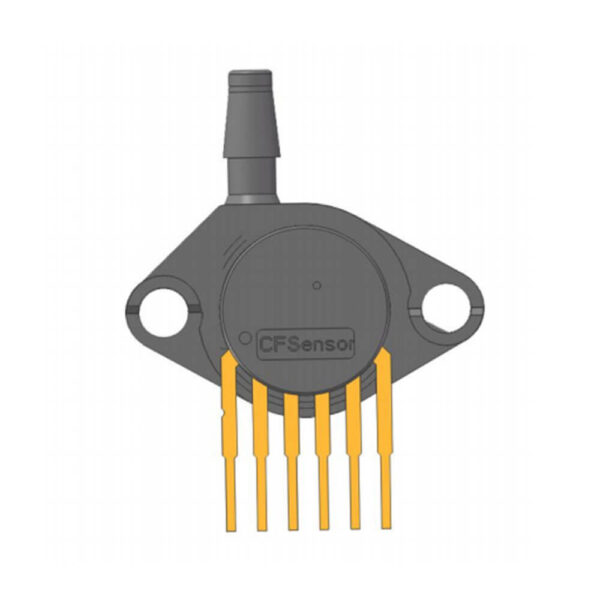
Showing all 21 results

Show 36

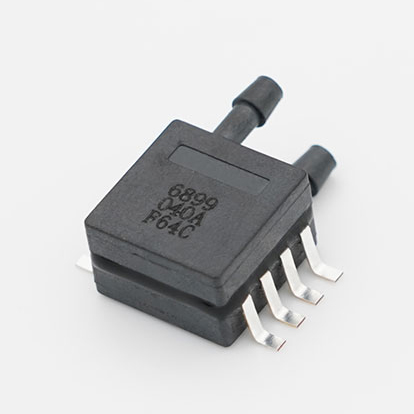
    XGZP6899A Sleep Apnea Pressure sensor

    • Wide Ranges: -100kPa…-0.5~0~0.5…700kPa(show in Pressure Range Example)
    • Differential Pressure Type
    • For Non-corrosive Gas or Air
    • Optional 5V and 3.3V Voltage
    • Calibrated Amplified Analog Signal(Refer to XGZP6899D for I2C interface)
    • Temp. Compensated: 0℃~+60℃(32℉~+140℉)
    • Direct Application, Low Cost.

    XGZP6897A Ventilator Pressure Sensor

    • Wide Ranges: -100kPa…-0.5~0~0.5…200kPa(show in Pressure Range Example)
    • Differential Pressure Type
    • For Non-corrosive Gas or Air
    • Optional 5V and 3.3V Voltage
    • Calibrated Amplified Analog Signal(Refer to XGZP6897D for I2C interface)
    • Temp. Compensated: 0℃~+60℃(32℉~+140℉)
    • Direct Application, Low Cost.

    XGZP6891A Ultra-Low Pressure Sensor

    • Wide Ranges: -10kPa…-0.5~0~0.5…10kPa(show in Pressure Range Example)
    • Differential Pressure Type
    • For Dry Non-corrosive Gas or Air
    • Optional 5V and 3.3V Voltage
    • Calibrated Amplified Analog Signal(Refer to XGZP6891D for I2C interface)
    • Temp. Compensated: 0℃~+60℃(32℉~+140℉)
    • Direct Application, Low Cost.

    Car Seat Pressure Sensor XGZP6818A

    • Wide Ranges: 0kPa~100kPa…2500kPa(show in Pressure Range Example)
    • Optional 5V or 3.3V Power Supply
    • Absolute Pressure Type
    • For Non-corrosive Gas or Air
    • Calibrated Amplified Analog Signal(Refer to XGZP6818D for I2C interface)
    • Temp. Compensated: 0℃~+60℃(32℉~+140℉)
    • Low Cost for wide application

    Liquid Pressure Sensor XGZP6826A

    • Wide Ranges: 0kPa~100kPa…2500kPa(show in Pressure Range Example)
    • Optional 5V or 3.3V Power Supply
    • Absolute Pressure Type
    • For Non-corrosive Gas or Air or Liquid
    • Calibrated Amplified Analog Signal(Refer to XGZP6826D for I2C interface)
    • Temp. Compensated: 0℃~+60℃(32℉~+140℉)
    • Low Cost for wide application
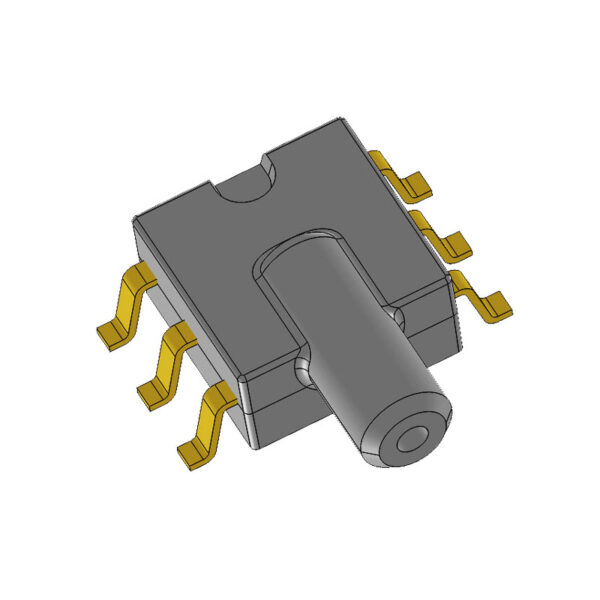
    XGZP6832A Pressure Sensor (KP215F1701 Pressure Sensor Alternative Parts)

    • Wide Ranges: 0kPa~100kPa…700kPa(show in Pressure Range Example)
    • 5Vdc Power Supply
    • Absolute Pressure Type
    • For Non-corrosive Gas or Air or Liquid
    • Calibrated Amplified Analog Signal
    • Temp. Compensated: -20℃~+85℃
    • Low Cost, PIN compatible.

    Air Pressure Sensor XGZP6847A

    • Wide Ranges: -100kPa…0kPa…1500kPa(show in Pressure Range Example)
    • Gauge Pressure Type(Positive&Vacuum)
    • For Non-corrosive Gas or Air
    • Optional 5V and 3.3V Voltage
    • Calibrated Amplified Analog Signal(Refer to XGZP6847D for I2C interface)
    • Temp. Compensated: 0℃~+60℃(32℉~+140℉)
    • Affordable Cost, Easy-to-use

    Amplified Pressure Sensor XGZP6859A

    • Wide Ranges: -100kPa…0kPa…1000kPa(show in Pressure Range Example)
    • Gauge Pressure Type (Positive&Vacuum)
    • For Non-corrosive Gas or Air
    • Optional 5V and 3.3V Voltage
    • Calibrated Amplified Analog Signal(Refer to XGZP6859D for I2C interface)
    • Temp. Compensated: 0℃~+60℃(32℉~+140℉)
    • Affordable Cost, Easy-to-use

    Board Mount Pressure Sensor XGZP6857A

    • Wide Ranges: -100kPa…0kPa…1000kPa(show in Pressure Range Example)
    • Gauge Pressure Type (Positive&Vacuum)
    • For Non-corrosive Gas or Air
    • Optional 5V and 3.3V Voltage
    • Calibrated Amplified Analog Signal(Refer to XGZP6857D for I2C interface)
    • Temp. Compensated: 0℃~+60℃(32℉~+140℉)
    • Affordable Cost, Easy-to-use

    Gauge Pressure Sensor XGZP6863A

    • Wide Ranges: -100kPa…0kPa…1000kPa(show in Pressure Range Example)
    • Gauge Pressure Type(Positive&Vacuum)
    • For Non-corrosive Gas or Air
    • Optional 5V and 3.3V Voltage
    • Calibrated Amplified Analog Signal(Refer to XGZP6863D for I2C interface)
    • Temp. Compensated: 0℃~+60℃(32℉~+140℉)
    • Horizontal Inlet for Space Saving.

    Water Tank Level Sensor XGZP6869A

    • Wide Ranges: -100kPa…0kPa…700kPa(show in Pressure Range Example)
    • Gauge Pressure Type (Refer to XGZP6858A for Absolute Type)
    • For Non-corrosive Gas or Air or Liquid
    • Optional 5V and 3.3V Voltage
    • Calibrated Amplified Analog Signal(Refer to XGZP6869D for I2C interface)
    • Temp. Compensated: 0℃~+60℃(32℉~+140℉)
    • Affordable Cost, Easy-to-use

    Gas Pressure Sensor XGZP6877A

    • Wide Ranges: -100kPa…0kPa…1000kPa(show in Pressure Range Example)
    • Gauge Pressure Type (Positive&Vacuum)
    • For Non-corrosive Gas or Air
    • Optional 5V and 3.3V Voltage
    • Calibrated Amplified Analog Signal(Refer to XGZP6877D for I2C interface)
    • Temp. Compensated: 0℃~+60℃(32℉~+140℉)
    • Barbed Inlet

    XGZP6885A Pressure Sensor (MPX5010GP,MPX5050GP,MPX4250GP, MPX5100GP,MPX5700GP Pressure Sensor Alternative Parts)

    • Wide Ranges: -100kPa…0kPa…700kPa(show in Pressure Range Example)
    • Gauge Pressure Type(Refer to XGZP6886A for Absolute Type)
    • For Non-corrosive Gas or Air
    • Optional 5V and 3.3V Voltage
    • Calibrated Amplified Analog Signal
    • Temp. Compensated: 0℃~+60℃(32℉~+140℉)
    • Barbed Inlet

    XGZP6887A Pressure Sensor (MPXV7002GP,MPXV5004GP,MPXV5010GP, MP3V5010GP,MPXV5050GP,MP3V5050GP, MPXV5100GP,MPXV4006GP,MPXV7025GP Pressure Sensor Alternative Parts)

    • Wide Ranges: -100kPa…0kPa…700kPa(show in Pressure Range Example)
    • Gauge Pressure Type (Positive&Vacuum)
    • For Non-corrosive Gas or Air
    • Optional 5V and 3.3V Voltage
    • Calibrated Amplified Analog Signal(Refer to XGZP6887D for I2C interface)
    • Temp. Compensated: 0℃~+60℃(32℉~+140℉)
    • Horizontal Barbed Inlet

    XGZP6881A Pressure Sensor (SM6295-BGC-S-040 Pressure Sensor Alternative Parts)

    • Wide Ranges: -100kPa…0kPa…200kPa(show in Pressure Range Example)
    • Gauge Pressure Type
    • For Non-corrosive Gas or Air
    • Optional 5V and 3.3V Voltage
    • Calibrated Amplified Analog Signal(Refer to XGZP6881D for I2C interface)
    • Temp. Compensated: 0℃~+60℃(32℉~+140℉)
    • Affordable Cost, Easy-to-use

    XGZP6841A Pressure Sensor for Washing Machine (ADP51B62 Pressure Sensor Alternative Parts)

    • Wide Range: 0~6kPa(customizable for other range)
    • Gauge Pressure Type
    • For Non-corrosive Gas or Air
    • 5V Power Supply, Ratio-metric Voltage Output
    • Calibrated Amplified Voltage Signal
    • Temp. Compensated: 0℃~+70℃(32℉~+158℉)
    • Affordable Cost, Easy-to-use

    XGZP6855A Pressure Sensor (AG2 Series Pressure Sensor Alternative Parts)

    • Wide Ranges: -100kPa…0kPa…200kPa(show in Routine Pressure Range)
    • Optional 5V or 3.3V Power Supply
    • Gage (Positive&Negative) Type
    • For Non-corrosive Gas or Air
    • Calibrated Amplified Analog Signal(Refer to XGZP6855D for I2C interface)
    • Temp. Compensated: 0℃~+60℃(32℉~+140℉)
    • Easy-to-use, Low Cost.

    XGZP6858A Pressure Sensor (MPXH6115AC6U,MPXH6115AC6T1, MPXx6250AC6T1, MPXH6400AC6U Pressure Sensor Alternative Parts)

    • Wide Ranges: 0kPa~100kPa…700kPa(show in Pressure Range Example)
    • Optional 5V or 3.3V Power Supply
    • Absolute Pressure Type
    • For Non-corrosive Gas or Air or Liquid
    • Calibrated Amplified Analog Signal(Refer to XGZP6858D for I2C interface)
    • Temp. Compensated: 0℃~+60℃(32℉~+140℉)
    • Direct Application, Low Cost.

    Absolute Pressure Sensor XGZP6878A

    • Wide Ranges: 0kPa~100kPa…2500kPa(show in Pressure Range Example)
    • Optional 5V or 3.3V Power Supply
    • Absolute Pressure Type
    • For Non-corrosive Gas or Air or Liquid
    • Calibrated Amplified Analog Signal
    • Temp. Compensated: 0℃~+60℃(32℉~+140℉)
    • Direct Application, Low Cost.

    XGZP6872A Pressure Sensor (MPX5100A,MPX5700A,MPX4115A Pressure Sensor Alternative Parts)

    • Wide Ranges: 0~100…700kPa(show in Pressure Range Example)
    • Absolute Pressure Type
    • For Non-corrosive Gas or Air or Liquid
    • Calibrated Amplified Analog Signal
    • Temp. Compensated: 0℃~+85℃(32℉~+185℉)
    • Direct Application,Low Cost.
    • Customization available

    XGZP6886A Pressure Sensor (MPX5100AP,MPX5700AP,MPX4115AP Pressure Sensor Alternative Parts)

    • Wide Ranges: 0~100…1000kPa(show in Pressure Range Example)
    • Absolute Pressure Type
    • For Non-corrosive Gas or Air or Liquid
    • Calibrated Amplified Analog Signal
    • Temp. Compensated: 0℃~+85℃(32℉~+185℉)
    • Direct Application,Low Cost.
    • Customization available

    Analog Pressure Sensor

    What is an analog pressure sensor?

    An analog pressure sensor is a device that converts a pressure measurement into an analog electrical signal. The analog pressure sensor typically consists of a pressure-sensitive element, such as a diaphragm, that responds to changes in pressure, and a transducer that converts the physical displacement of the element into an electrical signal. The electrical output of the sensor is usually a continuous voltage or current proportional to the applied pressure. Analog pressure sensor is commonly used in industrial and automotive applications as well as medical and scientific equipment.

    What are analog pressure sensor used for?

    Analog pressure sensor is analog sensors that is used to gauge the amount of pressure being applied to a sensor. An analog output signal from a pressure sensor will be proportional to the force being applied. Analog pressure sensor is used to measure pressure in a variety of industrial, automotive, aerospace, medical, environmental and other applications, the continuous output of the sensor can be used to monitor and control various processes and systems, make decisions and to understand the environment.

    How does an analog pressure sensor work?

    Analog pressure sensor work by converting the physical pressure being applied to the sensor into an electrical signal that can be read and interpreted by other electronic devices. The specific mechanism used to accomplish this conversion depends on the type of analog pressure sensor, some common analog pressure sensor include:

    • Strain gauge sensors – Use a thin, flexible material that deforms when pressure is applied. The deformation changes the electrical resistance of the material, which can be measured as an electrical signal.
    • Piezoresistive sensor – Use a semiconductor material that changes its electrical resistance when pressure is applied. The resistance change is converted into an electrical signal.
    • Capacitive sensors – Use a capacitor, which is a device that stores electrical charge. When pressure is applied, it changes the distance between the capacitor’s plates, which changes the capacitance. The change in capacitance can be measured as an electrical signal.

    Once the pressure has been converted into an electrical signal, it can be read and interpreted by other electronic devices. The signal is typically in the form of a voltage or current, which can be amplified or converted into digital form for further processing or display.

    What are examples of analog sensors?

    Analog pressure sensor, sound sensor, analog temperature sensor, and light sensor (LDR) are a few examples of typical analog sensor. Digital pressure sensors and temperature sensors are two examples of digital sensors that are often used.

    Where are analog sensors used?

    Analog sensors are used in a variety of industries and applications. Some examples include:

    • Industrial automation and control: Analog sensors are often used in manufacturing and process control to measure temperature, pressure, and other variables.
    • Automotive: Analog sensors are used in cars and other vehicles to measure speed, engine speed, oil and tire pressure, etc.
    • Aerospace and Defense: Analog sensors are used in aircraft and spacecraft to measure altitude, airspeed, direction, etc.
    • Medical equipment: Analog sensors are used in medical equipment to measure blood pressure, heart rate, and oxygen levels, among others.
    • Environmental monitoring: Analog sensors are used to measure things like temperature, humidity, and air quality in buildings, greenhouses, and outdoor environments.
    • Consumer electronics: Analog sensors are used in smartphones, tablets, laptops, and other consumer electronics to measure things like ambient light, proximity, and acceleration.
    • Robotics: Analog sensors are used in robots to measure things like distance, position, and orientation.

    In general, analog sensors are used wherever there is a need to measure physical properties of the environment and convert them into electrical signals that can be processed and analyzed by electronic devices.

    How do you tell if a sensor is analog or digital?

    There are several ways to determine if a sensor is analog or digital. Here are a few commonly used methods:

    Output Signal: One of the easiest ways to tell if a sensor is analog or digital is to check its output signal. Analog sensors typically output a continuous voltage or current proportional to the measured variable, while digital sensors output a series of numbers or digital code.

    Interface: Another way to tell if a sensor is analog or digital is to look at the interface it uses to communicate with the device or system it is connected to. Analog sensors typically use an analog electrical interface, such as a voltage or current output, while digital sensors use a digital interface, such as a serial or parallel bus.

    Data sheet: The sensor’s data sheet will usually specify whether the sensor is analog or digital. This is the most reliable way to know the type of the sensor.

    External components: Some sensors require external components such as an ADC (Analog to Digital Converter) to convert the analog signal to a digital one. If the sensor needs an ADC, it’s an analog sensor.

    It’s worth noting that some sensors may have both analog and digital outputs, or both analog and digital interfaces. In this case, it is important to check the sensor’s data sheet or consult the manufacturer to determine what type of output or interface is being used.